
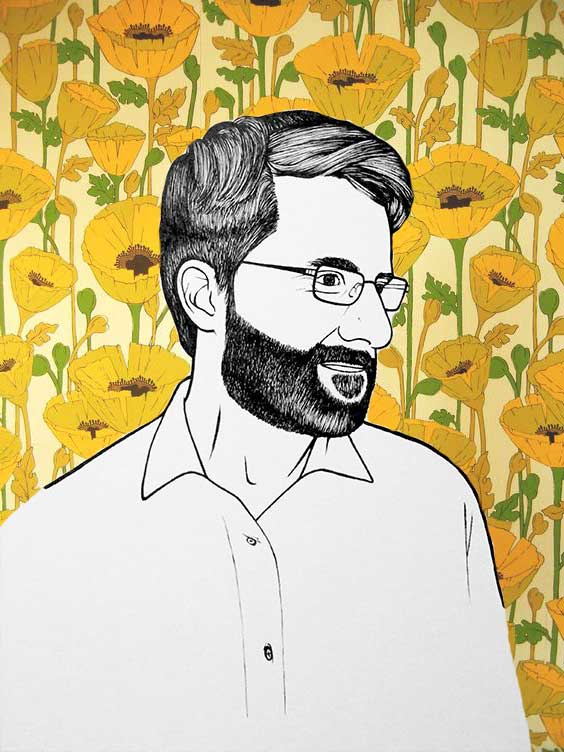
Seth Magle is a biologist and the director of the Urban Wildlife Institute at the Lincoln Park Zoo.
After finishing a dissertation on urban prairie dogs, Seth Magle started looking around at the astonishing number of species of wild animals that choose—for whatever crazy reason—to live right next to us in America’s biggest cities. Why would animals desert the forest and prairie to come live in our concrete jungles? As head of the Urban Wildlife Institute of the Lincoln Park Zoo in Chicago, on an every day basis Seth lives a life where he gets to research the reasons why coyotes, raccoons, rare native bees, squirrels—and yes, even prairie dogs—live in urban environments. What do they do in town once they’ve arrived? What do they eat? How do they interact with people? Should we make our buildings and real estate developments friendlier to nature and wildlife? Should we coax wild animals back into their own natural habitats? “There are countless questions left in front of us,” Seth says. “We’re all trying to get back to nature but we all live in nature.”
“Ecological theater is happening all around us.”
– Seth Magle is a biologist and the director of the Urban Wildlife Institute at the Lincoln Park Zoo.
After finishing a dissertation on urban prairie dogs, Seth Magle started looking around at the astonishing number of species of wild animals that choose—for whatever crazy reason—to live right next to us in America’s biggest cities. Why would animals desert the forest and prairie to come live in our concrete jungles? As head of the Urban Wildlife Institute of the Lincoln Park Zoo in Chicago, on an every day basis Seth lives a life where he gets to research the reasons why coyotes, raccoons, rare native bees, squirrels—and yes, even prairie dogs—live in urban environments. What do they do in town once they’ve arrived? What do they eat? How do they interact with people? Should we make our buildings and real estate developments friendlier to nature and wildlife? Should we coax wild animals back into their own natural habitats? “There are countless questions left in front of us,” Seth says. “We’re all trying to get back to nature but we all live in nature.”
What to do if you like wildlife
Love what Seth is doing and want to help him? The motion-triggered cameras Seth’s team installed throughout the Chicago region have snapped over a millions animal photos. They are looking for volunteers to help identify what’s in them. I’ve done this volunteer job myself—and have to admit, the activity is pretty mesmerizing. Once I started, it was hard to stop. I kept wanting to see which animal turned up next.
Sometimes you run across something especially compelling in a photo. (When you do, there’s a special “WOW” button to press, so scientists reviewing results will be alerted you found something noteworthy.) I also appreciated this particular volunteer activity because you don’t have to formally register and give up a lot of personal information to be part of it—you can just start identifying wildlife right away. Called Chicago Wildlife Watch, it’s an extremely satisfying way to do a bit of citizen science.
Also, if doing is not your thing but giving is, feel free to make an extremely large donation at any time to the Urban Wildlife Institute. Like now, for instance. Contact the Lincoln Park Zoo for that.
What to do if you see a wild animal
Enjoy it! Let the animal go its own way. Learn the extraordinary power and deep layers of freedom to be found in the word “coexistence.”
Where to watch something beautiful & inspiring about coyotes
The film CHICAGOLAND was created by Manual Cinema and written and directed by Ben Kauffman. Manual Cinema combines handmade shadow puppetry, cinematic techniques, and sound and music to create immersive visual stories for stage and screen. This one is about a coyote making its way through the big city.
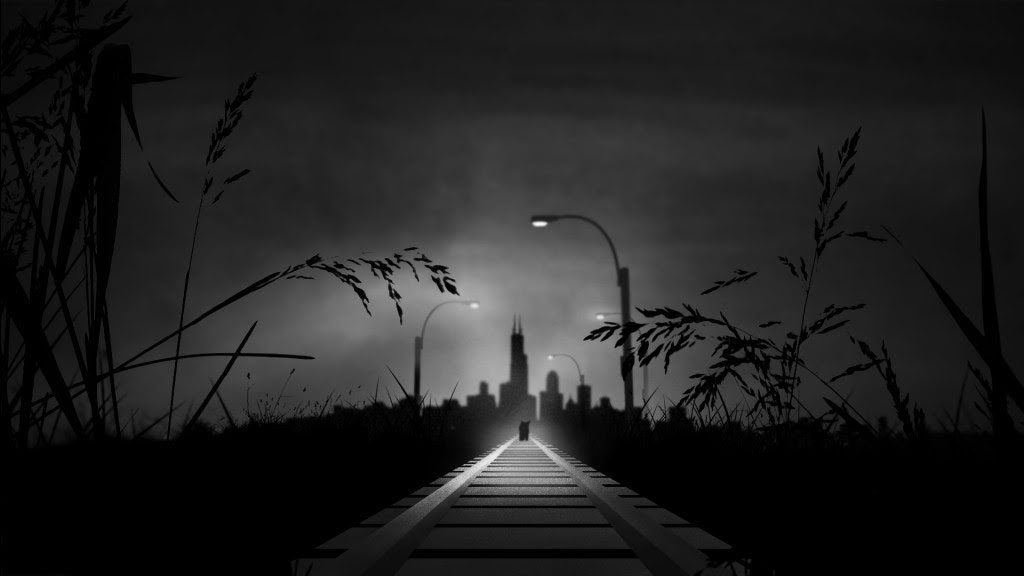
Still from the film CHICAGOLAND

Transcript of This Conversation
Riddell: An objective observer who doesn’t live in a particular city can view that city in a lot of different ways. From an aerial view as a historical construct. An academic might study migration of the human population in and out of that city. An engineer could be interested in the pipes and infrastructure that lay beneath the streets and the sidewalks. But when you’re the one living in the city, it’s different. Most of the time we residents live within and think about only a small, super specific neighborhood. In our habits, we tend to be provincial, territorial. I’ve noticed that the terrain my friends know the best are the little corridors they travel between their home and where they work. And of course, all of us know where our favorite places are to eat and the fastest way to get to those.
We humans are animals that always live in a specific habitat. We might change which habitat by moving to a different neighborhood, but always we have a habitat. We develop mental maps. Just like our ancestors did 20,000 years ago, we know where to find food. We know the roots where we feel the most safe. The corners we try to avoid. I’m Jill Riddell, and this is The Shape of the World.
Magle: My name is Seth Magle, and I’m the director of the Urban Wildlife Institute at the Lincoln Park Zoo.
Riddell: Seth Magle knows all about urban habitats. Seth sees cities as habitats not just for us, but for other animal species, the ones brave and sociable enough to try and share the city with us. He studies how animals carve out niches for themselves, sometimes right alongside where we’re living. They try to find someplace they can rest without being hassled, somewhere they can find food, and like us, a place where they can make a den and raise their young.
Magle: Our mission at the Urban Wildlife Institute is to do the research necessary to allow people and wildlife to coexist in cities around the world. We want to do the kind of work that helps us to build a space for wildlife on an urbanizing planet.
Riddell: What is urban wildlife?
Magle: Yeah, that’s a great question that has a simple answer and a complex answer. So the simple answer is urban wildlife are non-human animals living in cities.
Riddell: Okay.
Magle: And that’s pretty easy.
Riddell: So everything that’s animal that’s living here except for us.
Magle: Right. All creatures great and small, or you could also exempt pets probably. You’d say not dogs and cats. But both of those words are sort of complex in their definition. What is an urban area? Are we including suburbs? Is it any human modified environment? And urban biologists and urban geographers and other people like to fight about what is the definition of urban. And similarly, there’s no real consensus among the wildlife community about what is wildlife, because I just said I would include all animals, but I’ve talked to many people who say, “Oh no, insects aren’t wildlife.” And others who say, “Well, actually plants should be in our definition of wildlife.” So neither of those words really have a clear-cut definition. I think both of them are sort of a you know it when you see it kind of situation, but we really focus our effort largely on animals living in metropolitan areas as most people would define them. Clearly not just Chicago, but Chicago suburbs, and then also many other cities around the country and their suburbs.
Riddell: What mammals are the ones that are found most often in American cities?
Magle: Other than humans, of course. There are a number of mammals that are very prevalent in our cities. Of course, we could talk about squirrels. We could talk about gray squirrels and fox squirrels and all the other tree squirrels that we have. And we could talk about raccoons. And coyotes are increasingly common in a number of cities, foxes as well. Rabbits. Some of these species, like rabbits and squirrels, I think are actually so common that it flips some kind of switch with most of us where we don’t even think of them as wildlife anymore. They’re just part of the background. And I find that pretty interesting. And then we could talk about pest species like rats rats are incredibly prevalent in a lot of cities. But again, we don’t usually think of them as wildlife, but of course they are. They’re wild species that live in our cities and benefit from eating our refuse and other things.
So to me, that’s really one of the interesting things about urban wildlife, is that it spans this gamut between those species that we are desperately trying to eradicate and those that in some cases we actively welcome and we want to see more of in our urban landscapes.
Riddell: I heard the scientist, the biologist Joel Brown refer to cities like Chicago as “urban game parks,” and the idea that it switches the paradigm from thinking about all this built infrastructure that happens to have some wildlife living in it, but from the wildlife’s perspective, they’re living as wild and free as if they were in Yellowstone or the African Savannah.
Magle: It’s very interesting to think about what do we want the place for wildlife to be in our cities? We can’t eradicate wildlife from our cities. We’re not capable of it even if we tried, but are we going to actively encourage some species to live here? Are we going to manage them at some level that we find socially tolerable? And the answers to those questions are probably very different species by species. But of course, those species also don’t exist in isolation. They interact with each other and they live in this very complicated urban ecosystem that we don’t really understand very well.
So to me, that’s the interesting question, is how do we create a space for wildlife in cities without just generating conflict with humans? And what does that look like? If it looks like a wild game preserve, as Joel said, does that mean there’s hunting? Does that mean we’re actually hunting these species in cities? And what does that look like? I think there are a hundred questions like that, that as a civilization we’re going to need to answer.
Riddell: Is there a large city somewhere in the world that does a particularly good job of having policies and ordinances friendly to wildlife?
Magle: No. That’s a disappointing answer. And I may be wrong because I’m not familiar with every city, and every city has different levels of this kind of engagement. But in my expertise, I would say no. I would say that the cities that are doing the best, and Chicago is an example, have reached the level of saying, “Okay, we’re going to set aside some green space in the city. We’re going to build corridors.” But in my view, no city has gone the next step, which is to say, “Okay, let’s do the science to see, does that work? Are animals using that? And are they interacting with humans, and is that happening in a positive way or a negative way?” I think we’re still at that stage of just, “Well, green space is good.”
And green space on the whole probably is good, but the story is much more complicated than that, and some forms of green space are likely to attract the kind of wildlife species we don’t want. I think that we can do a lot better, I guess is the less pessimistic way for me to answer that question instead of just with a flat no.
Riddell: Well, but it’s also true we’re relatively new in thinking about cities that way. I had a colleague who worked for the Forest Reserve District for a period of time, and the calls when people would say, “Oh, I’ve got a raccoon in my yard,” all went to him. And he said that they always wanted to know either what they should do for it, as in, “What should I feed it and how can I take care of it?” or, “How can I get rid of it?” It was that, in their minds it was either a pet or it was a pest. Do you perceive people’s attitudes to be changing in their views of urban wildlife?
Magle: Well, I think you touched on two things there that are very interesting. And one is that, yes, I think more people are wanting to intervene in a positive way as opposed to, “Let’s get rid of this animal.” And that’s species specific. With snakes, I think most people are still feeling like, “Get it out of my yard.” But for coyotes, raccoons, I think more people are feeling positive towards them. But the other part of your question, it’s so interesting to me how we are so motivated to do something. And when I have people call me and, “There’s a coyote on my block, what do I do?” they don’t like it when my answer is, “You don’t have to do anything. It belongs there. It’s fine.” So we have actually started coming up with other things. I say, “Well, take a picture, put it on Facebook. If you need to do something, do that. Or talk to your neighbors about it.”
And being someone that works for a zoo, we are very motivated to get people to take action on behalf of wildlife, but we have to try to find some productive actions. Because, of course, if you see a wounded or an injured animal in your yard, a lot of people are going to want to rush out there and help that animal, but that’s often not the best thing to do, especially given that they may be carrying diseases, you may not be able to actually help that animal. So trying to channel that need, that motivation to do good in a positive way, I think is something we can all work on.
Riddell: I’ve always detected a little element of self-loathing in the way that we dismiss the animals that are willing to live with us.
Magle: That’s a funny observation. Working at a zoo, one of the things that I observe a lot that always amazes me is, especially with very young children, toddlers, you’ll see their parents dragging them around and the children are often fascinated by squirrels and pigeons and rabbits and their parents are saying, “No, no, there’s a tiger right over there. That’s what you have to look at.” But to these kids, the common animals are just as fascinating. And I think it’s too bad that in many cases we stamp that out.
Riddell: Right. They haven’t yet learned that they’re supposed to find things that are near us to be disgusting and things that are far away to be lofty and more interesting.
Magle: Yeah, exactly.
Riddell: Is there an urban animal that we see frequently and glance past that you know something more about, something that you hone in on and get excited about when you see it?
Magle: Oh, I think there are several. I’m fascinated by squirrels. I think that if you watch a squirrel for a moment, and I think we’ve all done that, just their agility, their ability to navigate this treetop world that’s above us that we know nothing about is just incredible to me. And then coyotes are endlessly fascinating to me. I was on a jog the other morning. It was very cold and it was dawn. And I looked to my left at one point up a ridge, and not 15 feet from me was a coyote essentially posing in this dawn light. I could see his or her breath curling around his face. It was a postcard moment, the same way you would see a wolf silhouetted on a postcard from Yellowstone or something, but right in the heart of a city. And I, of course fumbled for my phone and then he immediately ran off before I could get a picture.
But I’m just always amazed at how much biodiversity there is around us and how many of these Discovery Channel-type moments can happen if you just look up at the birds in the branches above you or look over at the rabbit that might be annoying you by chewing up a part of your front yard, and actually think, “Well, how does that animal go through its day? How does it find shelter and food and mates and do all those things in this landscape that, the one it evolved in was nothing like this urban landscape?” So to me, it’s amazing that these species make such a place for themselves on these concrete jungles that we build.
Riddell: It is amazing. When my children were little, I used to marvel that really everything I wanted to teach them about nature, I could teach them right in the city. There was life, there was death, there was birth, there were territorial displays, there were fights and conflicts, there was mating. Everything was happening in the city. We didn’t have to go a long distance to observe nature.
Magle: Yeah, that’s right, ecological theater is always happening around us. And back in the ’40s, Aldo Leopold said, “The weeds in a city lot conveyed the same lesson as the Redwoods.” And so many people spend so much money to trek out to Yellowstone or the Serengeti to have those kinds of encounters, and I’m not saying they shouldn’t do that, that’s great, but I think in some cases you can have those same kind of encounters right in your backyard.
Riddell: You absolutely can. I mean, that’s one of the things that I love the most about living in the city, is the fact that you can put on these different lenses, the lens of suddenly looking at the birds and the trees and seeing things in a whole different way. Or sometimes you put on your architectural lens and suddenly just looking at the big sheets of slate that have been used as siding on some building can carry you off to thoughts of a quarry far away and somebody bringing in that rock. There are all these different lenses to look at a city with, and the nature one, I tell people it’s like taking a drug without taking a drug. Suddenly you’re able to perceive all of these things that have always been there, but you just have to shift your focus a little bit.
Magle: Yeah, I think one of the things, though, that I’ve learned, is that when I’m in some neighborhood and someone asks me what I’m doing and I tell them I’m doing this urban wildlife study, first they say, “That’s crazy and you’re crazy.” Then they tell me their urban wildlife story, because everyone has a crazy story about a time they encountered an animal when they didn’t expect to. And I think that’s such an interesting observation that all of us city dwellers have had some kind of unusual encounter with wildlife. And often they’re very excited to tell it. They’re excited to meet someone that’s interested in their story. So again, I think it comes back to this notion that there’s been this assumption that we’re not interested in these common species, they don’t matter, they’re just part of the background. But when you dig even the littlest bit, you run into this deep vein of interest, and that can take the form of fear or awe or even anger depending on the type of encounter. But there are deep wells of emotion there, and I think that’s been very interesting to experience.
Riddell: After talking about emotions and how we feel about animals who live with us in cities, Seth and I switch it up and talk about the value of data. Caring about objective truth arrived at through gathering data and following logic, that’s something that isn’t important just in science, but in every human endeavor. Yes, we are animals. Yes, we have dens and habitats and we give birth to live young. But the thing that sets us apart, our superpower, if you will, is the lateral frontal pole prefrontal cortex, the part of our brain that thinks rationally.
The scientific method is one of the most beautiful of all human creations. It, along with its cousin mathematics, has made possible so many of our incredible human marvels and pleasures, everything from running water to iPhones, to particle accelerators, to no chip manicures and the pyrotechnics at a Super Bowl halftime show. The brilliance of knowing that it is worthwhile to gather data and the discipline to analyze that data, and the patience to see the whole process through, all of that is frontal lobe stuff. When we take a minute to think rationally, that’s when we are at our quintessential most human selves.
Tell me a little bit about the value of the scientific method. You’re living a life that’s steeped in rational thought and trying to make decisions about urban wildlife not from a place of emotion, but one where decisions can be soundly made, rationally made. What is the value of the checks and balances inherent in this scientific method?
Magle: Well, I think it’s incredibly valuable, and I think that all of us use these methods in our lives to a degree, these central ideas of being objective, of considering different lines of evidence, of trying not to let your personal bias influence your conclusions. I think that in some ways it’s more difficult in a field like ecology and conservation than it would be in a field like physics, because of course we get into this field because we have a love of nature. We’re attached to it. And I think sometimes there’s a perception that, “Well, you’re biased from the beginning because you care about these places.” And I’ve thought about that. But then someone else raised the point to me, they said, “Well, no one calls an archeologist biased when he says we shouldn’t tear down ancient ruins.” You accept that, well, he’s attached to this subject, and within that field he’s going to use his rational objective mind to uncover truths. And so that’s how I try to view it.
And I think that it’s a matter of scale in some cases. You can care deeply about the system as a whole while still not becoming attached to your individual hypotheses about specific questions you might have. I might feel that, yes, urban wildlife are critical and I’m going to spend a lot of my life as an advocate for them. But at the same time, am I completely attached to the notion that coyotes live in one kind of neighborhood and not another? No, I can be dispassionate about that. But walking that line, I think is a tricky place that all scientists have to ultimately engage with this notion of how much to be an advocate and how much to be an objective, dispassionate observer.
Riddell: I think that’s interesting, that criticism about biologists that they get into it because of a love of nature. I think that’s true. I mean, people follow their passion and follow their interests, but it’s a little bit like saying, “Well, we can’t trust economists because they have an interest in money and finance, and so they are too close to their subject matter.”
Magle: Yeah, exactly, it’s an odd criticism, but I have witnessed scientists that I respect a great deal get into shouting matches about to what extent biologists and other scientists should be expected to advocate on behalf of their systems. And there are certainly people in the field who probably think that I shouldn’t even be on this podcast, that we should only be publishing our papers and these dusty science journals no one will ever read, and letting other people somehow magically find them and then try to use them to make change. I really reject that idea, and I think that scientists in any field are the most knowledgeable people within that field. And if we want to glean knowledge about how we can move forward as a society with respect to whatever their discipline is, I think the scientists have to be directly involved in that process.
Riddell: Do you have any way to compare how you might have viewed the world if you hadn’t been a scientist and hadn’t been steeped in this mode of rational thought? Was there another path that you could imagine yourself having taken?
Magle: Well, it’s interesting because, to a degree, science kind of pulled me back in. I was very much a science nerd in high school, took all those classes and did fairly well. But when I got to college, what I said to myself was, “Well, I really want to make a difference, and what that means is that I should go into more of a public policy sphere.” So I started off in environmental policy and I took a lot of political science courses and philosophy courses when I was an undergraduate. At first I enjoyed it, but there was just something missing. And it took me about a year to realize that as much as I enjoyed talking about all of these big conceptual topics about how we live with nature, when there was no data behind it, I just felt like it was very unsatisfying.
And I thought, “Well, how do you know? How do you know that that policy will lead to this outcome? You don’t because you don’t have the data.” And after a year or two, I went, “Oh, I can’t believe it. I actually am a scientist.” So I went back into that world. And now I would say I’m creeping back slowly into that policy arena, but now I feel like I’m doing that with this weight of half of a career of data behind me. So I think I was sort of fated to be more or less where I am.
Riddell: Most scientists start with a love of the whole organism and then gradually become reductionists who then study smaller and smaller parts of the organism. What was your dissertation on? Did you study a particular organism when you were getting your PhD?
Magle: I did. Actually, when I was an undergraduate, I started studying urban prairie dogs, and I continued studying them for the next six years. When I finished that process and I took some time to look around, I think like all PhD students have to, and say, “Well, wait, what am I really doing with my life?” I think for a while I really thought, “Well, I’m a prairie dog biologist. That’s what I do. I’m going to study different things about prairie dogs.” Again, it took me a little while to slowly realize that, well, I like prairie dogs, but that’s not really what I’m interested in. What I’m really interested in is this notion of animals living in cities, especially those kinds of animals we don’t expect to live in cities. And that’s when I realized I was an urban biologist in the end. So I guess my focus became larger and not smaller.
Riddell: Is there a thinker or writer about science that you particularly admire who captures some of the beauty that you perceive in the work? And if so, who? And is there something specific that that person wrote or said that you carry with you?
Magle: Often when I go back to the Muirs and the Leopolds and those people, the writing is so inspiring, but it’s so divorced from the urban experience that in some ways it makes me feel a little bit like an exile. I actually had an experience somewhile back when I was talking actually with a Leopold scholar. And at one point I just looked at him and I said, “What would Leopold think of me? What would he think of someone who spends his career working in these urban landscapes?” And he said something like, “Oh, I think he would find that very sad.”
Riddell: Seth, what do you find beautiful in science?
Magle: Well, I find a lot of things beautiful in science, but I think the most beautiful part of the scientific process is that it’s so collaborative. It’s the teamwork. I work with a team of incredible scientists and we all have different skills. And when I can get them all into a room and when someone’s idea is elevated by someone else and then taken to the next level by the next person, to me that’s really the beautiful part of the process. I think when you watch television and movies and you see the scientific process, it’s always someone working alone and they’re moving index cards around or they’re playing on a computer and then they go, “Oh, Eureka, I’ve got it.” For me, all of my best scientific ideas have come from getting very smart people together in a room and riffing off each other. And that’s really the part that I find really inspiring.
Riddell: Yeah. I think it’s been a long time since there’s ever been a single author on a scientific paper.
Magle: Yeah, that’s right. And so that is, I think the public perception of science. And again, I’m sure some people work that way, but at least in my field, we work so much better in groups.
Riddell: So in addition to working with scientists, you do in your work, inevitably work with people involved in real estate, urban planning, decision-makers. Where are some places that you find a meeting of the minds, and where have you really clashed and your worldviews are just too different?
Magle: To be honest, in many cases that dialogue is in such an early stage, I don’t even think we can clash yet. We haven’t reached that point. So I’ve had a number of meetings with landscape architects, planners, and in many cases, our vocabularies are so different, our jargon is so different that it’s like learning another language. We’re trying to understand each other. But I have been really encouraged because I think in many cases our goals are the same, because many of these people really are interested in the notion of living with wildlife and finding a way to build greener cities in a smarter way. But yeah, just trying to even build a common vocabulary so that we can really start to drill into what would that really look like on the ground.
Riddell: Is there a physical tool or something that you take out with you when you’re going out in the field, or maybe it’s something that’s almost like a little talisman, like you know it’s going to be a good day if you’ve got that in the back of your truck?
Magle: When we’re out using camera traps to capture wildlife, we use a lure. It’s a clay disc that has been infused with this incredibly bad rotting flesh odor to attract animals. So I’ve worked with these things for years and years and they are really foul, and by the end of the day, your hands smell terrible. So one day while I was out in a forest preserve in Chicago setting these up, I found on the ground a bottle of unbelievably cheap roll-on cologne that sort of smells like you rolled around in a pine forest and then sprayed yourself with like Pledge, that lemon Pledge. But it smells better than the lure tablet.
So I started carrying what I affectionately call “the ground cologne” around with me to all these sites, and I would roll it on my hands between sites. I had it for a couple of years and then I lost it and I was very disappointed. And then three months later when I went back into the field, I rediscovered the ground cologne, which had changed color somehow from green to yellow, but was obviously the same bottle of cologne. And I still have it and I still carry it with me in the field because it’s very gross, but it’s not as gross as the alternative. That’s my science implement of choice.
Riddell: I wonder if it was glad to see you again.
Magle: If I’m not going to anthromorphize the wildlife, I better not anthropomorphize the inanimate objects, but I was glad to see it.
Riddell: Do you have any tenets that you live by?
Magle: My metaphor in my head I think often as I’m doing my work is kind of the same way as if I was exploring an alien planet, that there are so many unknowns, there are so many questions to ask, that all we can do is grab whatever’s closest and try to pull in as much data as we can. Because there really is the feeling that there are countless questions left in front of us, that in our lifetimes we will never have all the answers that we want about urban animals and how to live with them.
Riddell: I like that idea of being on an alien planet. It’s a way of seeing this environment that for many people is terribly familiar, being able to see it with those eyes as something alien and unfamiliar and the power in that.
Magle: I think the other reason I sometimes use that metaphor of the alien planet is that it reminds me that you should come in with very few preconceptions, because one of the ongoing themes in urban wildlife biology is we take patterns and principles that are derived from these same species living in natural habitats, and we assume that that’ll be functioning the same way in the city. And nine times out of 10 it’s not. They have had to modify so many behaviors. They’ve had to change so many things about the way they live. Think about coyotes that in their natural habitat are active at dawn and dusk. In the city, they’re active in the middle of the night. So I try to remove almost all of my existing biases about what I expect animals to do based on reading a bunch of papers about what happened in the forest or the prairie, because so, so often in the city, it’s completely different. We need a new playbook. So again, it’s almost like being on an alien planet where you’re starting from nothing.
We’re all trying to get back to nature, but we all live in nature. We all live in a form of nature, and it’s as simple as opening your eyes to it. Anywhere you live, you live in a very cool place if you just take the time to look around at the wildlife and the plants and vegetation and the nature around you.
Riddell: Seth, this was so good. Thank you so much.
Magle: You’re welcome. Thanks, Jill.
Riddell: Thanks for listening to The Shape of the World. I hope this conversation with Seth Magle inspires you to see the city and city dwellers a little differently. Take some time this week to step outside and take a fresh look at who and what lives in your neighborhood or shares your habitat.
Next week, are art and science really so different?
Macnamera: I’ve never made a painting that compares to that bird. Are you kidding? A better artist than me made that bird.
Riddell: The shape of the world is about nature and people and the world we share. It’s a production of the Office of Modern Composition, a business that creates compositions and fosters composers. If you have a story to tell, the Office of Modern Composition can help. They can go all DIY and teach you how to write and produce the story yourself, or they’ll do the whole thing for you. Either way, you will end up with a permanent archival piece that presents your ideas and experiences.
The Shape of the World is produced in the vital, vigorous and beautiful metropolis of Chicago in the Prairie State of Illinois. You can find Shape of the World on Facebook and Instagram and on the website, shapeoftheworldshow.com. There, you’ll find a film about coyotes in Chicago and a drawing of Seth by the artist, Rose Curly, and much more. Shape of the World’s producer is Isabel Vasquez. The theme music is composed and performed by Brad Wood. Thanks to today’s guest, Seth Magle, and thank you to the Lincoln Park Zoo.

