
Each of the largest cities on Earth plays host to hundreds of thousands of dogs. Many megalopolises contain millions of dogs within their municipal borders. Whether those dogs are privately owned (and perhaps pampered in chic apartments), community-owned, free-roaming, or stray, it’s a fact of nature that canines make up a substantial part of the urban biota in places like New York City, Sydney, Tokyo, Mexico City, São Paulo, Delhi, Mumbai, and Istanbul.
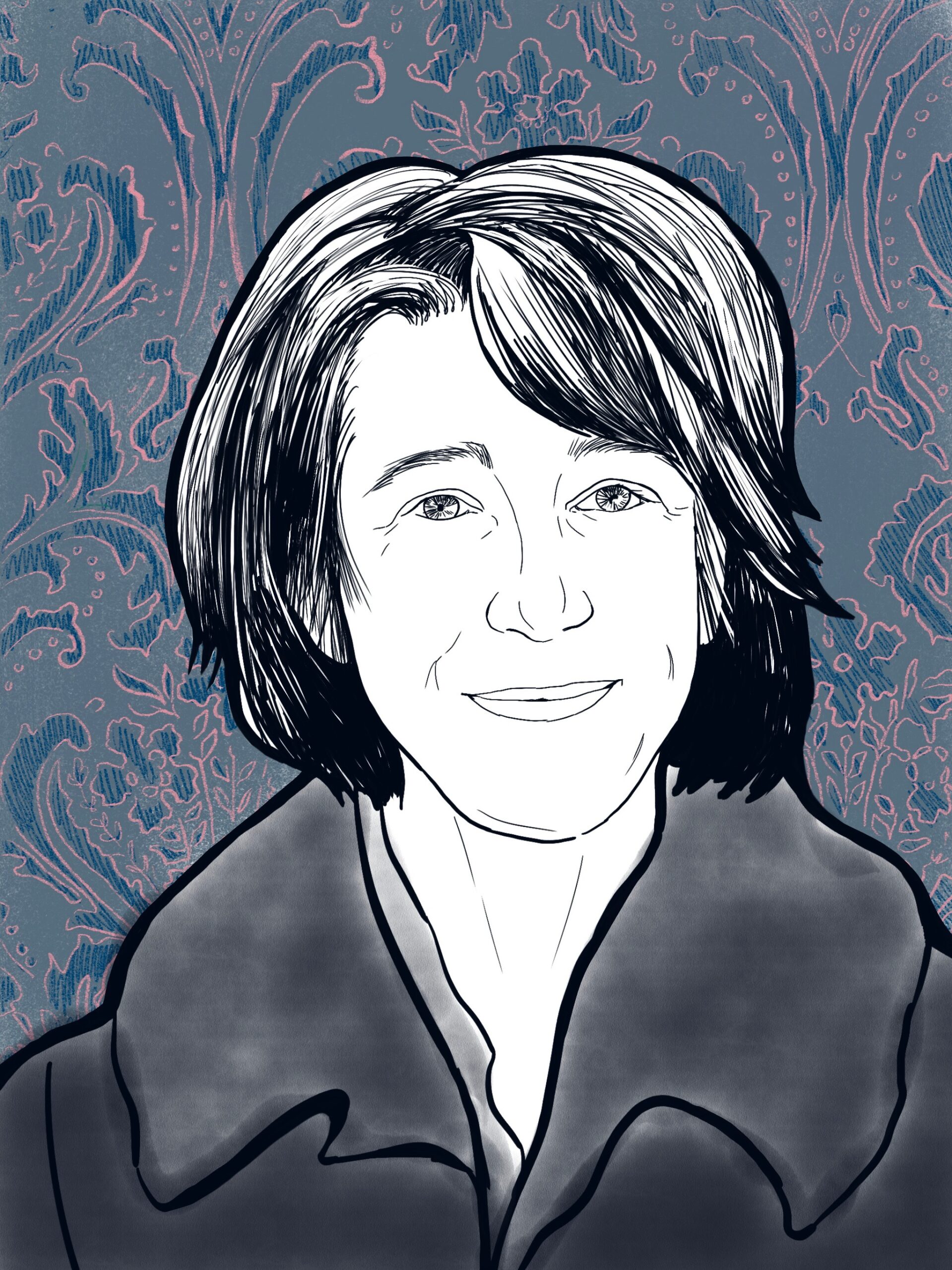
Dr. Alexandra Horowitz, founder of the Dog Cognition Lab at Barnard College and the author of the bestselling book, Inside of a Dog: What Dogs See, Small, and Know, discusses how dogs managed to become such ubiquitous residents of cities, and how we human city dwellers can improve living conditions for the dogs living in our midst. In this episode, she encourages us to challenge the assumptions we make about dogs’ thoughts, emotions, and motivations.
“I want people to re-imagine everything we know about dogs—all the things that seem so straightforward and so obvious.”
– Dr. Alexandra Horowitz, cognitive scientist, author, and founder of the Barnard Dog Cognition Lab in New York City.
Learn More About Alexandra Horowitz
At Barnard College in New York City, Alexandra works as a professor in the departments of English and Psychology, teaching classes on dog cognition and storytelling. There, she also founded and heads the Dog Cognition Lab.
Alexandra has published many academic papers and has written seven popular books. She is a cross-over artist who works in the discipline of science, but who also excels in merging that with narrative non-fiction. In 2009, the book Inside of a Dog: What Dogs See, Smell, and Know was number one on The New York Times bestseller list. Simon & Schuster has published a new edition of this book, which incorporates updates on research and new ideas. Ask your local bookseller to procure you a copy if they aren’t already carrying it, or purchase it here.
Also, check out her Ted Talk, “Why All Dogs Are Good Dogs,” which explains how dog “misbehaviors” are well-justified efforts to communicate with us.
THE BARNARD DOG COGNITION LAB
Alexandra’s lab at Barnard College, founded in 2008, investigates the behavior and minds of dogs through scientific experiments that involve dogs and their owners. Using puzzles, scent-based tasks, objects, and games, the lab researches everything from olfactory perception, memory, and navigation to communication, play, welfare, and the social relationships dogs have with humans and other dogs. For example, their most recent article (published in the 22nd issue of Animals), found that the “shaking” dog phenomenon, which is typically perceived as a sign of stress, may actually indicate a transition between activities. To see the full list of scholarly publications from the Dog Cognition Lab, visit this webpage.
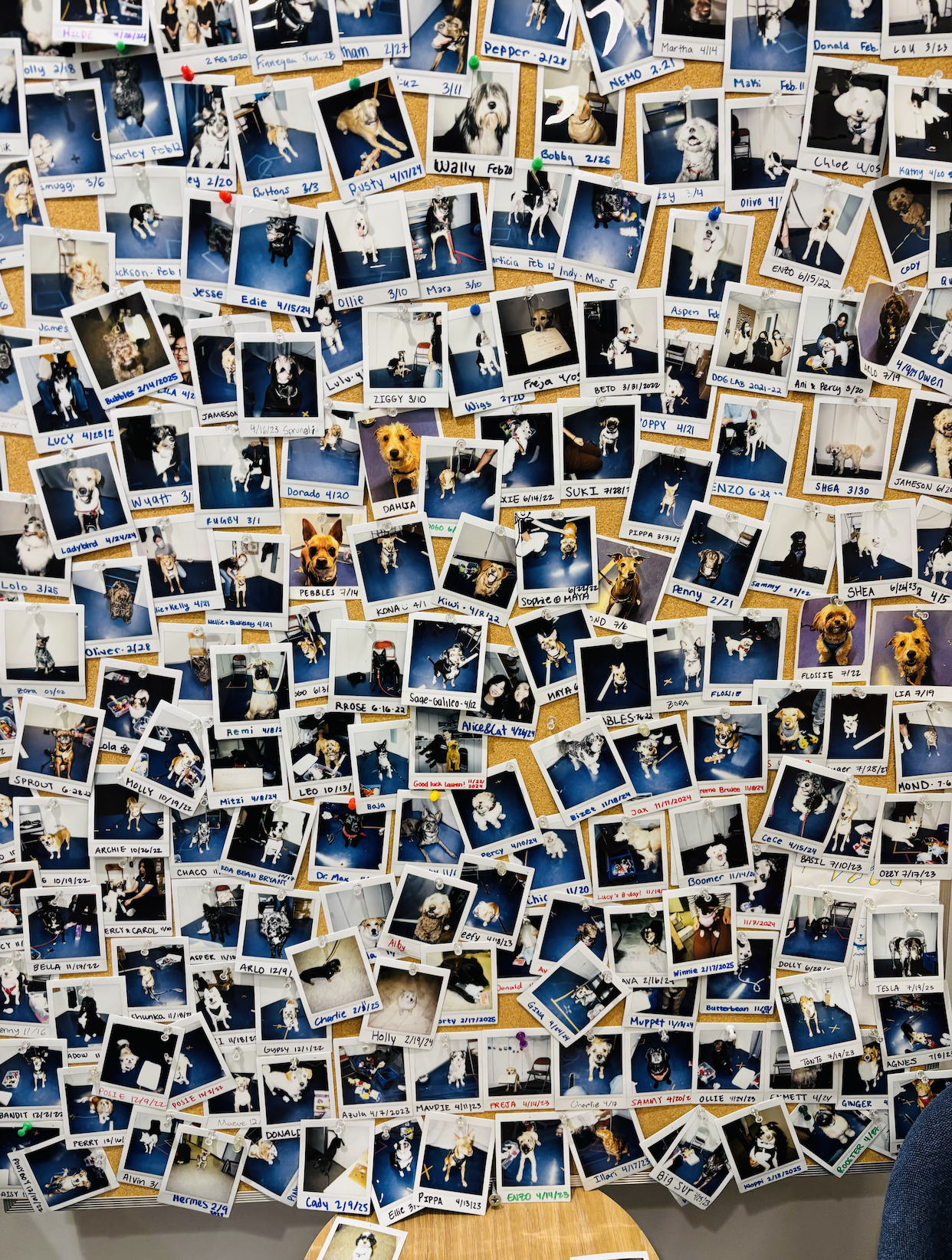
In the lab, researchers draw from various fields and methods, such as comparative cognition (comparing how species think, learn, and solve problems), ethology (observing species under “natural” conditions), and behavioral biology (examining why animals behave the way they do). Their research aims to understand dogs from a dog perspective, rather than a human one, which means that experiments are designed around dog’s abilities and agencies. They mostly work with New York City dogs, many of whom can be seen in this assemblage of Polaroids that hangs on the lab’s wall.
STORIES AND PEOPLE MENTIONED IN THE EPISODE
When Alexandra and Jill discussed the practice of close-looking, Alexandra mentioned the writer Annie Dillard. Alexandra didn’t mention the title of book she was referring to, but it had to have been Pilgrim at Tinker Creek. In it, the author visits a particular stretch of a creek in Virginia for one year, using daily walks as occasions to observe mostly the natural world but also the human.
Alexandra mentioned Sidney Horenstein as an individual who taught her the art of looking (while Alexandra was writing On Looking: Eleven Walks with Expert Eyes). He once referred to New York as “one of the great geologic meccas in the world.”
Jill described a passage in a book written by Jesse Ball — the title for that is Silence Once Begun (Penguin Random House, 2014).

