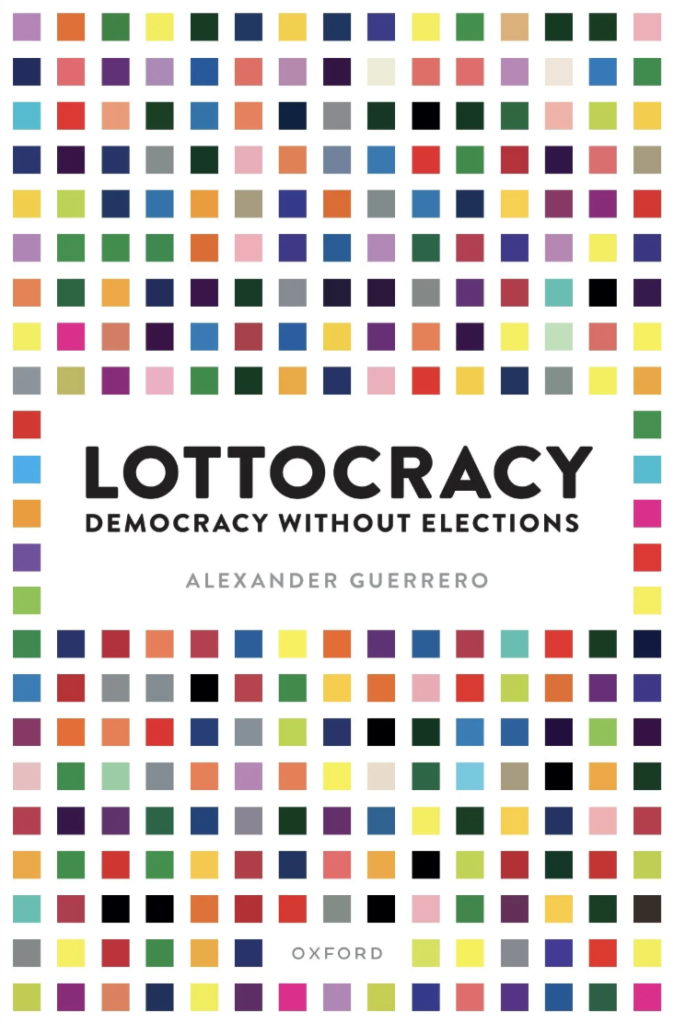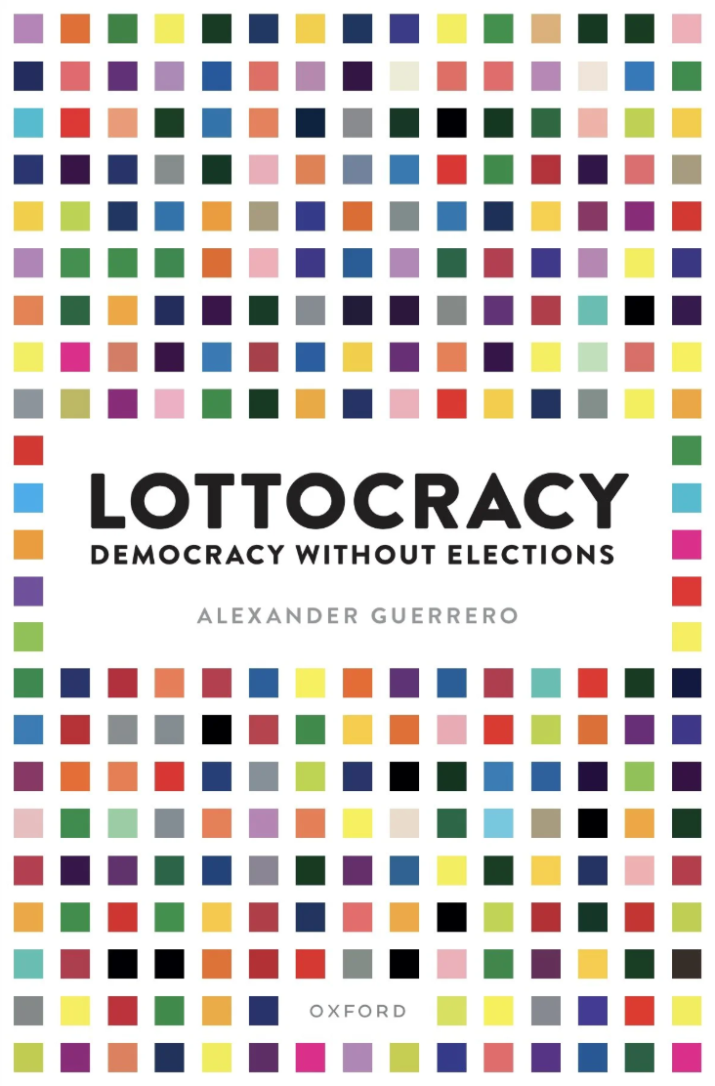
What if your upstairs neighbor, your cousin, or the bartender down the street were chosen by lottery to represent you in government? Author and political philosopher Alex Guerrero believes this radical idea, known as lottocracy, is a better alternative than voting.
The idea is that instead of an individual announcing they want to be a leader and then launching a campaign to become one, our representatives in government would be chosen by random selection. To some degree, the concept is already utilized; the United States uses random selection to assemble its juries for legal trials, and in Europe and Canada, groups known as “citizens’ assemblies” are assembled by random selection to discuss and make recommendations on a particular issue.
In this episode, Alex examines the benefits and drawbacks of lottery-based democracy. But in general, he is a huge proponent of the concept, and he and others are working hard to make it a reality. He is convinced it will reduce the influence of money in politics and reduce corruption. It could ease gridlock and produce fairer and sounder policies. And it could make more inclusive political systems. But what would this process actually look like? And could it make the shape of the world as we know it even better?
“Democracy in America and elsewhere is not a disaster, but we need to make some changes. Instead of getting more depressed and anxious and isolated, we should start coming together to try out different things.”
– Alex Guerrero, Author and Professor of Philosophy at Rutgers University.
Learn More About Alex and His Work
Alex has created a free, online, open-to-all course on Coursera, called “Revolutionary Ideas: An Introduction to Legal and Political Philosophy.” Over 30,000 people have enrolled in this course, and you can, too.
If you want to read more of his work specifically on the idea of lottocracy, we recommend his book on the subject, Lottocracy: Democracy without Elections (Oxford University Press, 2024), as well as “The Lottocracy” (AEON Magazine, 2014) and “Against Elections: The Lottocratic Alternative,” (Philosophy and Public Affairs, 2014). Alex has over 40 publications on philosophy and applied ethics, all of which you can find here.
Alex believes underrepresented philosophies in the U.S. deserve more of a voice in higher education and that more courses should include them. He wrote about his own experiences teaching African, Latin American, Native American and Indigenous philosophies in Philosophers’ Magazine, which you can read here). He co-organized a summer institute called “NEWLAMP,” which trains college-level philosophy teachers on how they might incorporate these philosophies in their courses.
In addition to his work at Rutgers University, Alex is the Associate Editor for Ethics, a peer-reviewed international journal of social, political, and legal philosophy published by the University of Chicago Press. This academic year, he is serving as a Laurance S. Rockefeller Visiting Faculty Fellow at Princeton University.
How to Jump Into the Lottocracy Movement
Various organizations around the world are working to advance the implementation of lottocracies at city levels, state levels, and federal levels—with varying degrees of success. In some places, they have become normalized, while in others the concept still feels strange and unfamiliar. You can learn more about online communities, think tanks, and member-led organizations working on this here.
One such organization is Sorition USA, which Alex serves on the board of. It helps organize and connect individuals and various groups that are promoting and implementing sortition and random selection. They have local chapters, each taking up different issues. If you’re interested in getting involved near you, visit their website. (“Sortition” is the more formal and familiar term for what Alex is calling “lottocracy.”)
More on Details Mentioned in the Episode
Alex mentioned another recent book on the subject called Politics Without Politicians, written by Yale political theorist Hélène Landemore (Penguin Random House, 2026). In this book, Landemore makes a case for citizen-run politics and discusses her experience organizing the climate citizens’ assembly in France. You can purchase a copy of that book by ordering it from your local bookstore or order it from the publisher.
At the end of the episode, Alex said that listeneres can email him with any questions, which you can do here: aag198@philosophy.rutgers.edu.
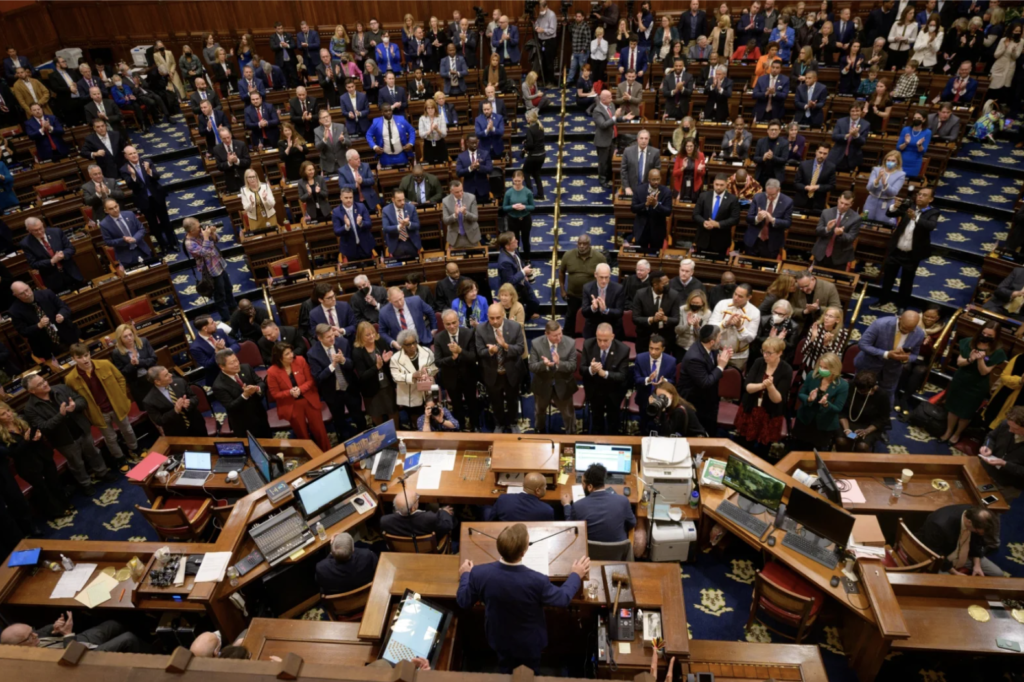
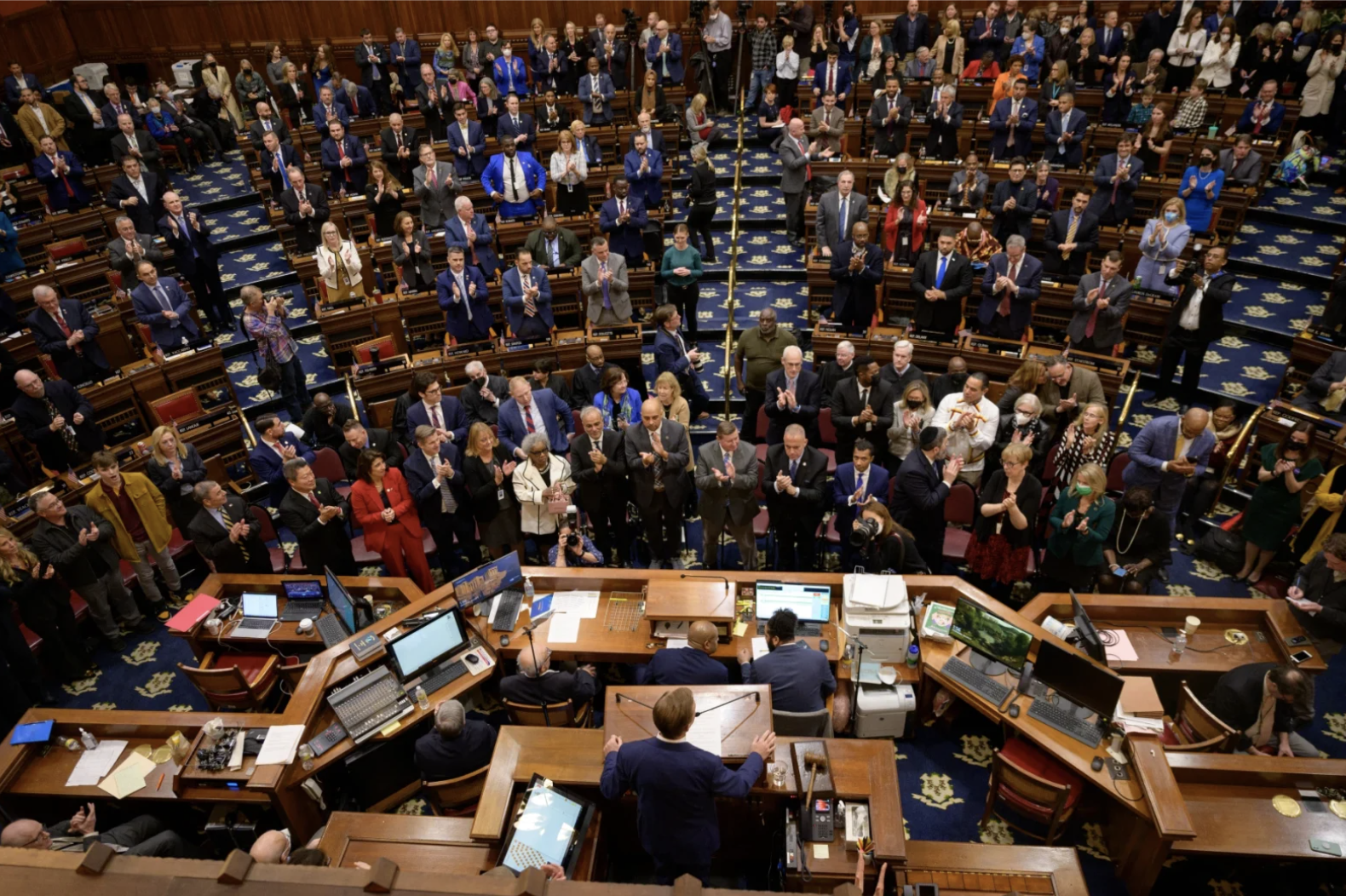
The Connecticut Citizens’ Assembly (Credit: Ryan Caron King / Connecticut Public, 2025).