

This episode was originally published in 2021, but we’re bringing it back because the questions landscape architect Sarah Cowles asks—about which kinds of nature get space in our cities—feel particularly urgent right now. As debates over land, development, climate resilience, and public space continue, Sarah offers a radically different way of thinking about urban ecology, landscape architecture, and about what nature in a city can actually look like. When welcoming nature to our human cities, do we aim for an artificial remaking of what once was there? Or do we go with the plants that long to grow there now, the ones that are perfectly suited to take on land that was once paved?
Sarah Cowles named her landscape architectural studio in Tbsili, Georgia “Ruderal,” which is a biological term that refers to plants adapted to disturbed environments—species that can thrive in the difficult conditions of cities. Several years ago, Sarah established Ruderal after leaving the United States and going to live and work in the nation of Georgia. In this episode, she talks about how the Soviet Union was dedicated to sustaining “Big Health Landscapes,” large outdoor spaces intended to heal and renew—and what that legacy now looks like up close and in person in Georgia.
“We so finely tune infrastructures to the nth degree but what if we put a little bit extra in there as a kind of wild card? I wish more people could see the potential of setting aside a little bit of surplus.”
– Sarah Cowles, Director of Ruderal, a landscape architecture studio in Tbilisi, Georgia
How to Find Out More About Sarah Cowles’ work
At the time of this episode’s original publication back in 2021, Sarah Cowles’ work on Arsenal Oasis had been shortlisted for LILA (the Landezine International Landscape Award). Soon after the release of that episode, the project won the 2021 LILA Special Jury Award. Pearly Jacobs, the audio producer who recorded Sarah’s end of the podcast interview over in Georgia made this cool video about Arsenal Oasis; it really brings it to life.
Sarah Cowles has published various pieces about ruderals in Landscape Architecture Magazine, including After Extraordinary Conditions and Crisis Actors (2020), and Tooling Up (2018). She has also writen extensively about urban design, landscape architecture, and Ruderal’s work on her Substack, Sarah at Ruderal.
“Ecologists use the term ruderal, from the Latin rudus (rubble), to describe disturbance-adapted species,” writes Sarah Cowles. “Ruderal species embody the unruly, tenacious, and opportunistic qualities of vegetation. They are metaphorically paradoxical: indexing catastrophe and abandonment, yet conversely representing resilience and renewal.” [Paper presented to and published by the Association of Collegiate Schools of Architecture, available here.]
On Ruderal‘s website, you can sign up for their newsletter. You can see more photos of Arsenal Oasis and their other projects on Ruderal’s Instagram, their Facebook, their Linkedin.
What Didn’t Make It Into the Episode but Is Important to Know About Georgia
This didn’t quite make our final cut, but it’s important not to ignore the fact that within Georgia, more than a quarter-million people have been displaced from their homes and their land during several conflicts that have flared up in the nation’s relatively brief post-Soviet history. Here’s one seven-minute audio piece on the subject that gives a taste of what’s been going on.
In the unedited interview conducted for this show, in the context of our discussion of the resorts, Sarah said, “After the fall of the Soviet Union, most of the resorts fell into disrepair. And then others were repurposed by displaced persons from the different conflicts in the nineties and the early two thousands. So some of the ethnic Georgians who had to leave Abkhazia and South Ossetia moved into those resort buildings and hotels. And since then, some have been upgraded and their conditions have slightly improved, but displacement is an ongoing crisis.”

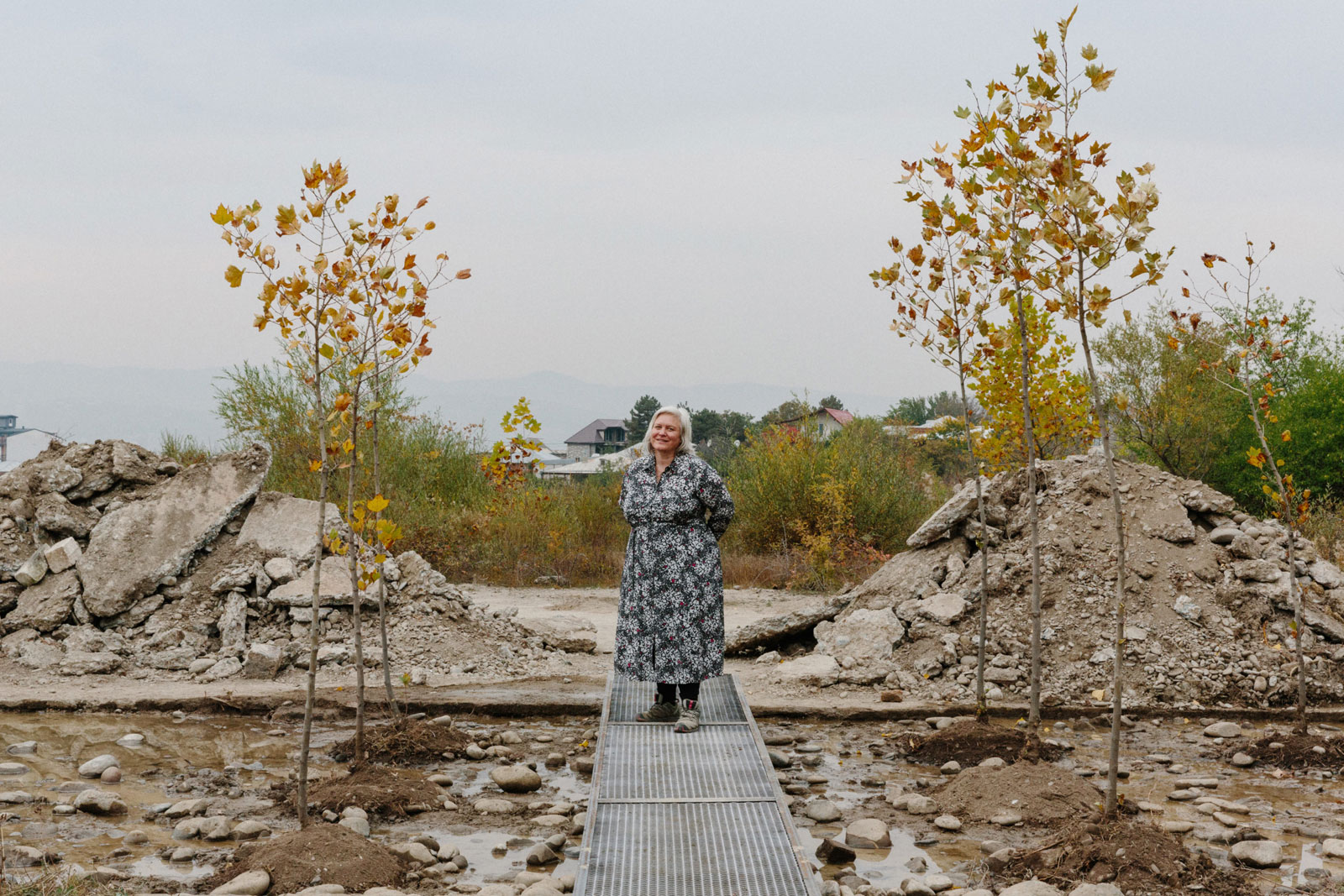
Sarah Cowles at the Sycamore Pool of the Arsenal Oasis. The project, designed and built by Ruderal for the 2020 Tbilisi Architecture Biennial and discussed extensively in this episode won the Special Jury Award in the Public Landscapes category at the LILA (Landezine International Landscape Award) 2021.
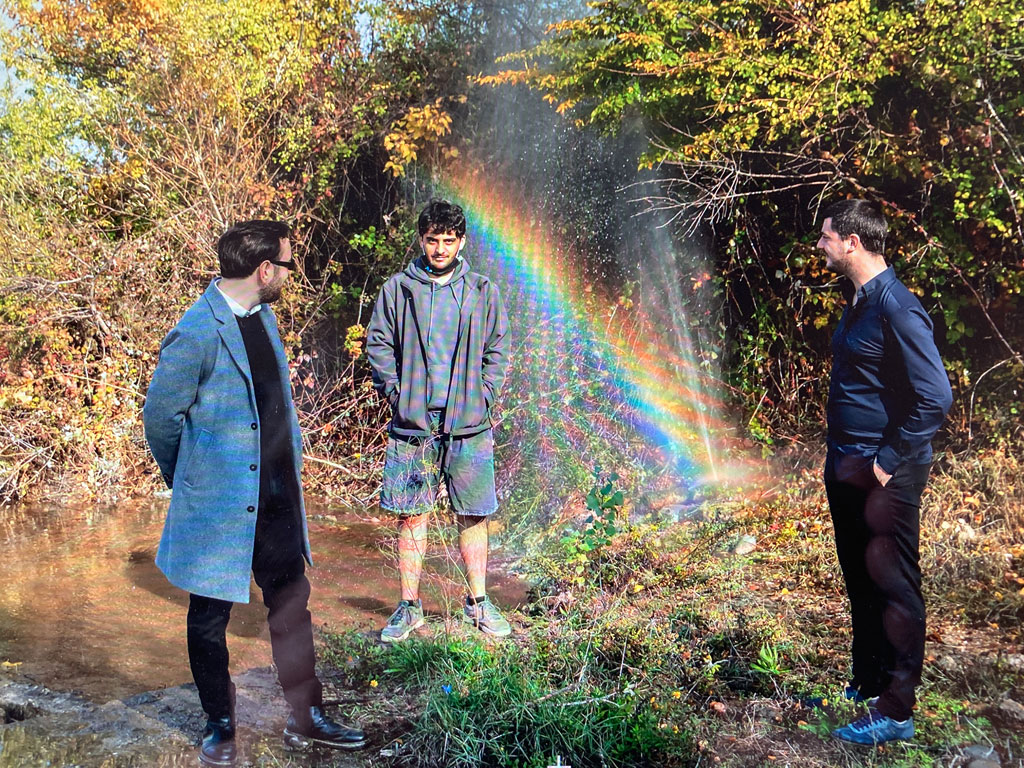
Giorgi Nishnianidze, Giorgi Vardiashvili and Elia Katamadze of Ruderal stand near the rainbow Sarah describes in the episode. It’s formed by the spray from a broken water main that provided the genesis for Ruderal’s project at Arsenal Oasis in Tbilisi, Georgia. 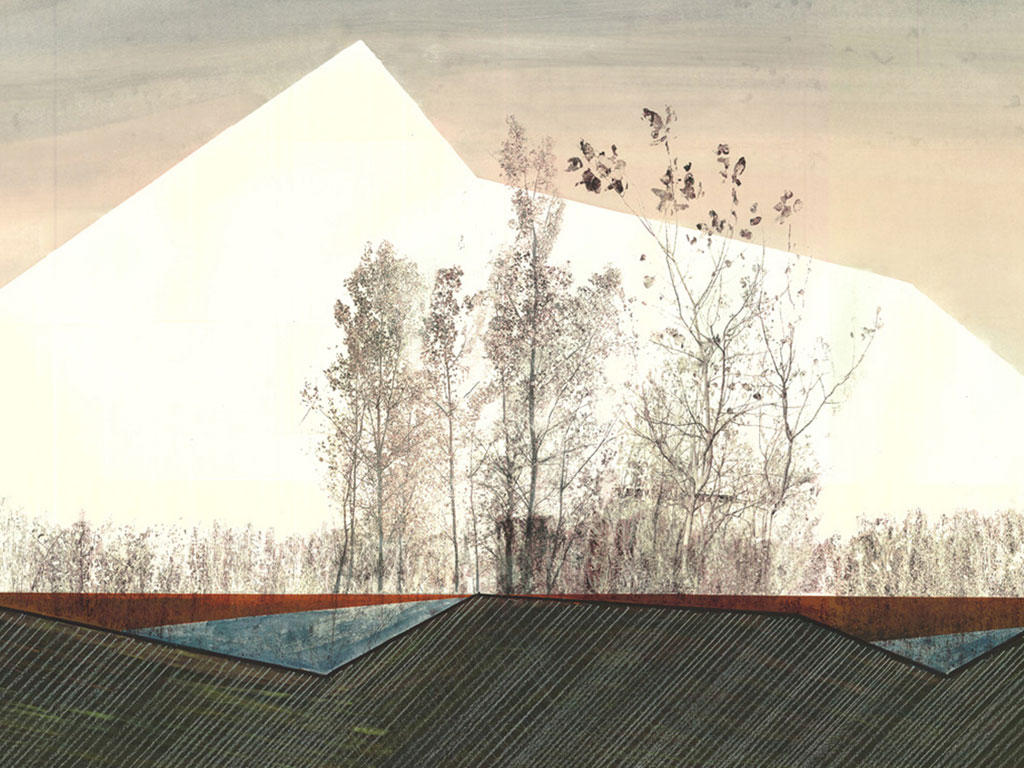
The Salt Mountain Disturbance: Brine Dam” Xerox transfer and colored pencil on paper. on Arches paper. 22 in x 30. 2008. Drawing depicting brine flow impoundment and salt stockpile on the former railyard and ruderal forest in Columbus Ohio. Artwork by Sarah Cowles.

